


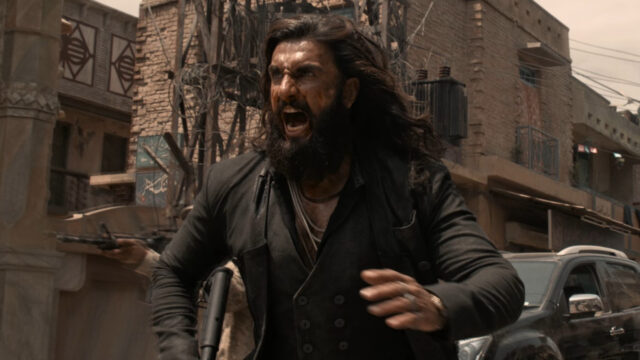
After delivering a blockbuster with Dhurandhar last year, Aditya Dhar is back with the second installment of the film, led capably by the man of the moment – Ranveer Singh, and ably supported by Sanjay Dutt, Arjun Rampal, Rakesh Bedi, R. Madhavan, Gaurav Gera and others. But does Dhurandhar: The Revenge match up to deliver the highs of its prequel? Is the absence of Akshaye Khanna felt at all? Read on to find out…
PS: Minor spoilers ahead.
Story:
While the first part of Dhurandhar focussed on world-building and introducing the key characters, as Ranveer Singh’s Jaskirat Singh Rangi infiltrates Rahman Dakait’s (Akshaye Khanna) gang as Hamza Ali Mazari in Lyari (Pakistan), Dhurandhar: The Revenge brings to light Jaskirat’s backstory and all that unfolds in Lyari and Karachi post Rehman Dakait’s death. The second installment centres on how Hamza goes on to annihilate all his rivals and opposing gangs to become the undisputed king of Lyari, the Badshah of Karachi (by extension), and Sher-E-Baloch, and ultimately obliterate the entire nexus of terrorist camps in Pakistan. Hamza is also a family man now, providing all comforts to his wife Yalina (Sara Arjun) and child, as well as catching the eye of Bade Sahab and becoming a part of the very same inner nexus that he’s sent to destroy. The film also attempts to shed light on why this mission is personal for him. Will Jaskirat’s cover as Hamza be blown? Or will he succeed in his mission to decimate the very core of terrorism in Pakistan? That’s what Dhurandhar 2 is all about.
Review:
It’s never easy to live up to or exceed the expectations of the audience when your last release has wrecked the kind of havoc that Dhurandhar did at the box office upon its release last year. Naturally, the makers would want to dial up and double down on everything that they thought made the first film of this two-part franchise a smashing success. Writer and director Aditya Dhar is no different. Everything in Dhurandhar: The Revenge, from the scale, merciless violence, hypermasculinity, barbarism, to even the repository of vintage songs included, has been dialled up a notch. In doing so, Dhar, however, loses the nuances, the thehraav, and the emotional quotient that played a crucial part in making the first film a highly engaging watch and such a mammoth success.
What worked for the prequel, despite its runtime of 214 minute (three hours 32 minutes), was the carefully crafted world, the interpersonal relationships of the characters who spent enough time with each other, the look and feel of the town, its dingy rooms that almost lent a lived-in feel to the film’s milieu for the audiences to form a connect with them. This is where Dhar falls short in the sequel, for everything seems to be happening in a jiffy, rushed with multiple montages, without giving enough time to the audiences to connect with or root for any of its characters. The backstory of Jaskirat and how he became an undercover agent for India, honestly, wasn’t even something we haven’t seen before in older films. What makes it work, though, is the way the action choreography has been executed and brilliantly performed by Ranveer Singh (more on that later).
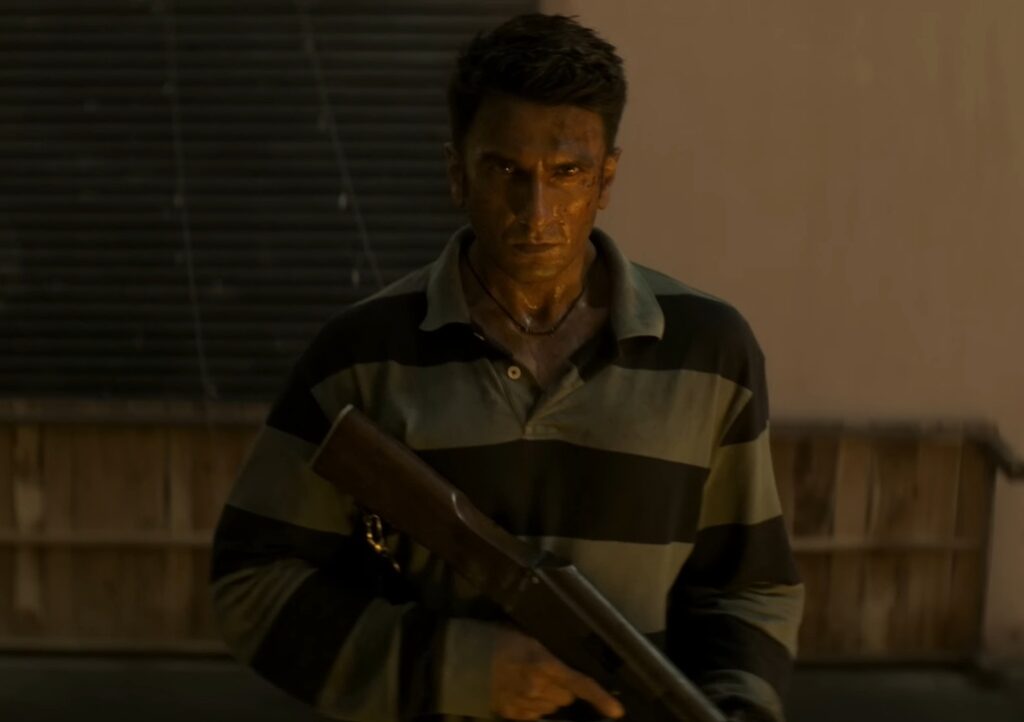
While Dhar found a new love language for filmmaking with the culmination of violence, gore, and bloodbath in the first part, in Dhurandhar 2, he has left no stone unturned in crafting a 229-minute-long prose, adding multiple hyperboles to the very same newfound love language. Much like its prequel, the second installment is also not for the faint-hearted. The makers have found new and creative ways to showcase gore and barbarity. So, rival gang members are beheaded by pulling down the shutters of a shop, one’s eyes are pierced with a syringe or knife or practically any other sharp object in sight, limbs are mercilessly hacked like those of a goat in a butcher’s shop, decapitated head becomes a football in the marketplace, people are burnt alive, even guns are aimed at one’s genitalia so that the bullet cracks open their skull after being shot. It’s so much that you become numb after a point of time, and you may (or may not) still be ready to witness so much gore and bloodbath on screen.
Our biggest gripe with Dhurandhar: The Revenge is with the way the screenplay unfolds. While the chapter-wise treatment of the narrative worked well in the first part, here it somehow just adds to the lethargy and the film’s three-hour, 49-minute-long run time starts testing your patience. Several scenes, including the climax chase, seem to have been unnecessarily stretched and lacked the adrenaline rush of the chase sequences in the first part. Despite the scale and magnitude, the screenplay doesn’t turn out to be as engaging and gripping as the previous film. It seems as if one’s simply watching one montage after another, especially in the first half, without delving deeper into the crux of the matter at hand.
What makes matters worse is the choppy editing and visual effects that aren’t on par with its predecessor (probably the pressure of meeting the release deadline got to the makers). There are scenes where the lip-sync is visibly off, and you can clearly make out that certain dialogues were changed in the dubbing process. Such instances speak volumes about how the second part falls short on the nuances and “peak detailing” that were much praised in the first part. Moreover, the writing becomes too convenient, linear and one-dimensional, with key characters conveniently disappearing from the screen.
If the first part bordered on jingoism and subtle propaganda in favour of the ruling government, Dhurandhar 2 goes all guns blazing in becoming a mouthpiece for the party in power. Even the propaganda has been dialled up and here it’s quite in-your-face. The stage was already set for justifying Demonetisation in the prequel; in this one, Dhar goes a step further to include the Babri Masjid verdict, the killing of a certain Muslim gangster of UP on camera, the Uri-attack and the following surgical strikes. He doesn’t hold back from hinting at Khaalistanis being in cahoots with Pakistan’s ISI to destroy India. As if all that wasn’t enough, there are scenes where the terror nexus chiefs in Pakistan are shown to be grieving and trembling because of a certain “chai waala” in India (peak facepalm moment).
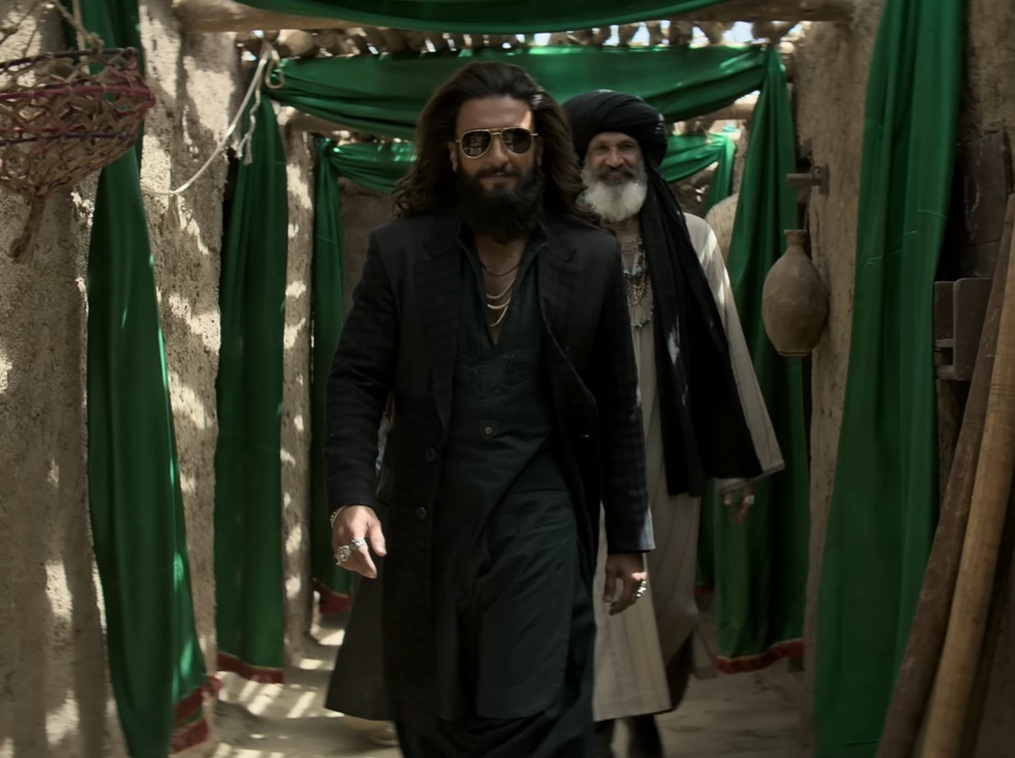
Dhurandhar: The Revenge also suffers from the lack of a strong antagonist. This is where Akshaye Khanna’s Rahman Dakait’s absence is felt quite deeply. While many expected the menacing Major Iqbal (Arjun Rampal) to fill the void left by Dakait in the second part, to our utter disappointment, the writing doesn’t give him enough meat to capitalise on his sinister and merciless persona as established in the first part. One expected Major Iqbal’s character to be more brutal and barbaric in the second installment but instead, he’s given a backstory which may make some to even empathise with him. The attempt to recreate the aura farming of Khanna’s Dakait as he’s given the title of Sher-E-Baloch with Flipperachi’s FA9LA playing in the backdrop somehow falls flat with Ranveer Singh’s Hamza’s crowning ceremony with the same title, at the same place, albeit this time the track playing in the backdrop is Didi by Khaled. It just doesn’t work!
Shashwat Sachdev’s exceptional music was another huge factor in making the scenes in Dhurandhar land the way they did. Almost every track, original as well as the recreated vintage ones, was a banger, lending a distinct character to the scenes. In the sequel, his music loses character and doesn’t suit the scenes as well. Only Aari Aari and Main Ya Tu stand out, but still don’t quite match up to the level of Ishq Jalaakar, or Na De Dil Padesi Nu. The use of old songs like Tirchi Topiwaale, Tamma Tamma, Oye Oye, and even Rasputin, does bring in some nostalgia and smile to your face, but doesn’t give you an adrenaline high like Rambha Ho, or Monica O My Darling, or Lutt Le Gaya did. After the first part, expectations were skyrocketing from Shashwat to deliver another banger of an album, especially with the entire T-Series library at his disposal, which now seems to be a missed opportunity with a comparatively underwhelming score. However, even as the tracks don’t rival those in the first part, they are still better than the noise we hear in the name of music these days. It’s a bummer that the songs in the music album (barring the two aforementioned tracks) neither work individually, nor in their placement in the film.
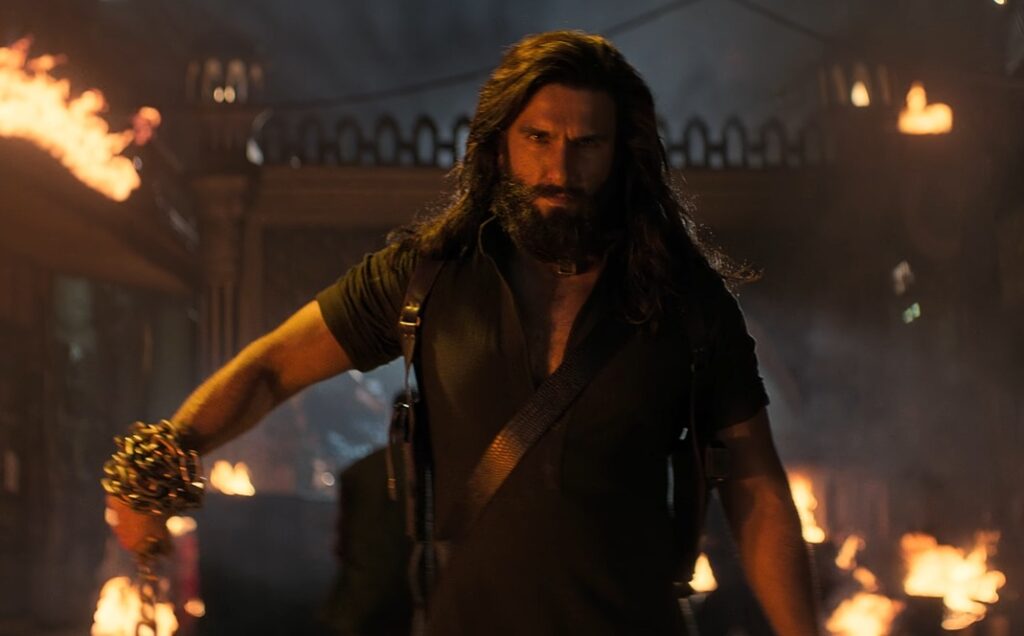
What works for Dhurandhar 2 is the superlative performances by every single cast member, beginning with an absolute jaw-dropping act by its leading man, Ranveer Singh. He single-handedly carries the entire film on his able shoulders. Whether it is the hard-hitting scenes in Jaskirat’s back story, where he effortlessly switches between seething with rage while on a killing spree, to the youngest son of his family witnessing his sibling in a horrific state, or the absolute beast mode that he unleashes in the enemy territory, Ranveer doesn’t miss a single beat of his character. He had already set the bar quite high with his act as Khilji in Padmaavat (2018). In Dhurandhar (1 & 2), he supersedes his own benchmark by miles. You witness Ranveer (with his luscious mane) and his capabilities in all their glory, aptly making him the “Babbar Sher” that R. Madhavan’s Ajay Sanyal trained him to be. While he’s brilliant in the action set pieces, he especially stands out in the emotional scenes as Jaskirat and with Sara Arjun as Yalina. Every quiver of his lips, the fear and remorse in his eyes, make for some of the finest acting chops on display even as he doesn’t utter a single word.
Sanjay Dutt seems to be having the time of his life as SP Chaudhary Aslam and delivers a memorable act. Rakesh Bedi’s antics and buffoonery as the opportunist politician Jameel Jamaali bring in the much-needed comic relief, making you crack up every time he’s on screen. Arjun Rampal delivers a commendable performance as Major Iqbal. However, his character needed some better-written scenes to justify his introduction as the ‘Angel of Death’. Madhavan gets comparatively more screen time here, and he does full justice to the same. Gaurav Gera, too, is apt and does his job well. There’s little to do for Sara Arjun’s Yalina here, but she tries to make the most of the limited screen time allotted to her.
Verdict:
Despite the hype, the three-hour, 49-minute-long runtime, and exceptional performances by the cast, Dhurandhar: The Revenge falls short of being as engaging and captivating as its prequel, owing to shoddy editing and a screenplay that becomes too convenient to ignore. The runtime tests your patience as the film attempts to blur the lines between fact and fiction. Even the music doesn’t serve the same high as it did in the first part, and the barbarity and bloodbath have been increased manifold. One may still not be ready to witness such gruesome visuals on screen. However, the phenomenal performances by the cast, especially Ranveer Singh, some cleverly-written dialogues, and a couple of surprise plot twists, especially in the last chapter, offer some respite. Is it a worthy successor to its prequel? Probably not. Does it warrant being seen in theatres? Yes, to know Jaskirat’s back story and find the answers to the questions that lingered at the end of part one. If not, then for Ranveer Singh alone, the film should be given a chance.
PS: Please watch the film as a “fictional narrative” interspersed with some real life incidents and do not mistake it to be factual.
(All images, unless mentioned otherwise, via YouTube/Screengrab)


