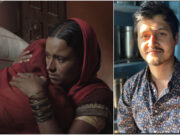



Priyanka Bose is known for portraying diverse and unique characters onscreen. From playing character roles in films like Love Sex Aur Dhokha and Guzaarish to starring in the hit American TV series The Wheel of Time, and more recently alongside Manoj Bajpayee in the critically acclaimed Jugnuma (The Fable), the talented actor has come a long way and established herself as one of the most versatile performers today. Her upcoming release, Agra (2023), directed by Kanu Behl, which is set to be out in theatres on November 14, 2025, garnered huge praise and attention across the world, as well as a five-minute standing ovation during its premiere at the 2023 Cannes Film Festival in Directors’ Fortnight.
In a candid conversation with The Movie Mail, the talented actor shares her excitement about independent and underdog films gaining recognition across the globe. She shares her different experiences of working as an actor in India and abroad. She hopes to work with directors like Abhishek Chaubey, Kiran Rao, and Richie Mehta, and also aspires to collaborate with Fahadh Faasil in the future.
Edited excerpts:
Q. What made you say yes to Jugnuma (The Fable)?
A. An aspiration to work with Raam (Reddy) came after I watched Thithi (2015). The time aligned perfectly as he was also asking about me to the casting director at the same time, who connected us. It was an interesting manifestation and alignment, and I’m grateful for that. When I met him and read the script, I sensed an emotional core to it. Personally, I need to connect with something emotionally to make my journey with the film smooth. Because we’re not going to the factory, but making movies, which means we have to put our heart and soul into it. Fortunately, certain emotions resonated with me while taking up Jugnuma.
Q. How do you see Jugnuma contributing to the conversations beyond cinema?
A. I’ve always had these big questions as a child about what happens to us when we die. I have always asked these kinds of questions when I was little. Nowadays, adults are adulting so much that they are not living their lives but merely surviving. I hope Jugnuma brings that conversation and clarity about living and what happens to us when we die. I hope people resonate with it the way I did.
Q. You worked with some of the most talented actors in the film. First, tell us about your experience of working with Manoj Bajpayee and Deepak Dobriyal. Secondly, how was it to reconnect and work again with Tillotama Shome after 15 years, since Gangor (2010)?
A. I had most of my scenes with Manoj (Bajpayee). He’s a cool, smart, and intelligent person. He has so much experience and has done some really diverse work. It was quite an experience to work alongside him. Meanwhile, I’ve always thought that Deepak (Dobriyal) is a great actor, and a very sensible and sensitive man at the same time. However, we don’t share too many scenes in the film. He comes from the mountains, and he brought that personality into his character, which is also from the mountains. So that was very comforting to watch.
Sadly, Tilotima and I didn’t have any scenes together. In the film, she is telling a story to the villagers, and it’s not connected to what was happening with us. However, we met during the promotions for Jugnuma, and it was great.
Q. What impact do you hope Jugnuma leaves on audiences?
A. Jugnuma is an independent film. Even if it comes from a very puritan kind of space, its expanse is vast. Indie cinema is immensely capable of holding the space with the right kind of support. I want people to understand that, because a lot of indie films are doing so well. I’m hearing such good things about so many other films that I’m going to watch now, including Sabar Bonda and Humans in a Loop. So I’m very excited about the underdog situation at the moment, because I feel like that’s where amazing storytelling can be done without any pressure.
Q. Your film Agra was released in 2023 but never made it to Indian theatres back then, while internationally it received glowing reviews and even a 5-minute standing ovation at Cannes. How do you feel about this stark contrast in the way this film has been treated at home versus abroad?
A. You already get a sense that if people give you love abroad, then it’ll be received a certain way over here. Also, I believe that if I’m not going to do the underdog stories like Agra, then who will? It’s a catch-22, because the reason I’m saying yes to certain subjects and projects is the same reason someone says no to them. I’m not here only for the adulation or validation; I’m here because I understand the work, and I have the skill set for it. So I’m very hopeful for Agra that people will appreciate the hard work in the ecosystem, for the sake of different kinds of storytelling and its execution.
Q. How did Agra come your way, and what aspects of the initial brief sparked your interest in the project?
A. Thithi (Raam Reddy) and Titli (Kanu Behl), both films came out around the same time, and I wanted to work with both of these directors. So, I had put it out there, and the only person I said it to was Tess (Joseph), the casting director. When I mentioned to her that I would love to get in touch with Kanu, she said that he has a great part for me in his next film. At the same time, he was meeting a few other people as well, because other casting directors had different choices. But, after understanding what my character and the story of the film needed, Kanu and I discussed a few things, and he understood that whatever I was bringing to the table was way more interesting. After that, we worked quite well together.
Q. How important do you think an intimacy co-ordinator is for a film like Agra? Does it make an actor’s job more comfortable and professional?
A. Absolutely! Intimacy coordinators are very important because it’s a very harsh environment. The directors are seeking breakthroughs with the actors, but at the same time, are not being extremely professional. During certain intimate scenes, there are two parties, and both of them are equally vulnerable and clueless. So, unless you’re letting the actors lead, and take over and direct the entire scene, I don’t think directors should be allowed to film any sex scenes without intimacy coordinators, period!
Q. Do you feel that it’s unfair that various kinds of content have been green-flagged for OTT releases, yet a film like Agra, which sincerely and truthfully talks about sex, mental health and life-crisis issues, took so long to get a release date here?
A. Honestly, it is unfair. Considering the demographics we’re talking about, what kind of access do we actually have to mental health resources, healing, or personal development? Someone like me has time, patience and places where I can escape to, all because I have the resources for it. But in India, 80% of the people are unemployed, but nobody’s talking about that. There’s another demographic where men don’t have jobs, and they’re mentally sick, while women have functional jobs. For example, in Agra, all the women have functional jobs, but the men aren’t doing anything. That’s patriarchy in itself. This whole dichotomy is true, and I find it hilarious.
Q. You are an Indian actor who has worked across a wide range of projects in Indian cinema as well as in international films and shows. What differences do you notice in the work culture, the artists, and the filmmakers between domestic and foreign projects?
A. The only thing I find better is the food when I work here (India). But there’s a certain professionalism that I only find abroad. Such as the planning on the set is so apt that I only have to show up and know my lines, while over here, it’s a bit more chaotic. There’s a certain hierarchy that is seen here, and it’s comical. If an actress is the lead in the film, then she will have a bigger car than mine. These things don’t happen across the border, and along with actors, there is a certain amount of equality among the technicians and staff as well.
Q. Is there a character in a recent show or movie that has caught your fancy and made you want to play something similar?
A: Sometimes, when I watch something, I do wonder why those directors or producers didn’t think of me for something like this? When I see my peers doing certain roles, I genuinely feel I could do that too. I understand that directors don’t have as much say because networks have a stronger influence, and the game has changed a bit. But I’m hopeful that things will shift with time, for everyone, and I’m just waiting for the time to turn for me.
The Wheel of Time gave me something that I’d been dying to explore independently, including my warrior spirit, some action, and something that lets me step out of that core responsibility of always being the mother, the martyr, the self-sacrificing one. The Wheel of Time gave me a different kind of situation to work with, apart from the constant stereotype, and that really meant a lot. Meanwhile, I am hoping that after my latest movie, Jugnuma and the upcoming Agra, people will understand that I’m able to carry a film on my shoulders.
Q. We’ve witnessed you in a barrage of impactful films by some great filmmakers. Share a few directors’ names, with whom you want to work but haven’t had the chance yet.
A. Abhishek Chaubey is fantastic, and I really want to work with him. I also wish to work with Kiran Rao and Richie Mehta. Danis Tanović (Bosnian director and screenwriter) is another filmmaker whom I find immensely talented and surely would like to collaborate with. Apart from the directors, I would love to work with this incredible actor named Fahadh Faasil from the Malayalam film industry.
Q. Please, tell us about your upcoming projects.
A. Currently, I am only waiting for the release of the films that I’ve recently done in India. The first one is produced by Shoojit Sircar and stars Babil (Khan) in the lead role. Meanwhile, I also completed filming for The Playback Singer, which marks actor Chandan Roy Sanyal’s debut directorial. However, I have no idea about the exact release date of these projects.